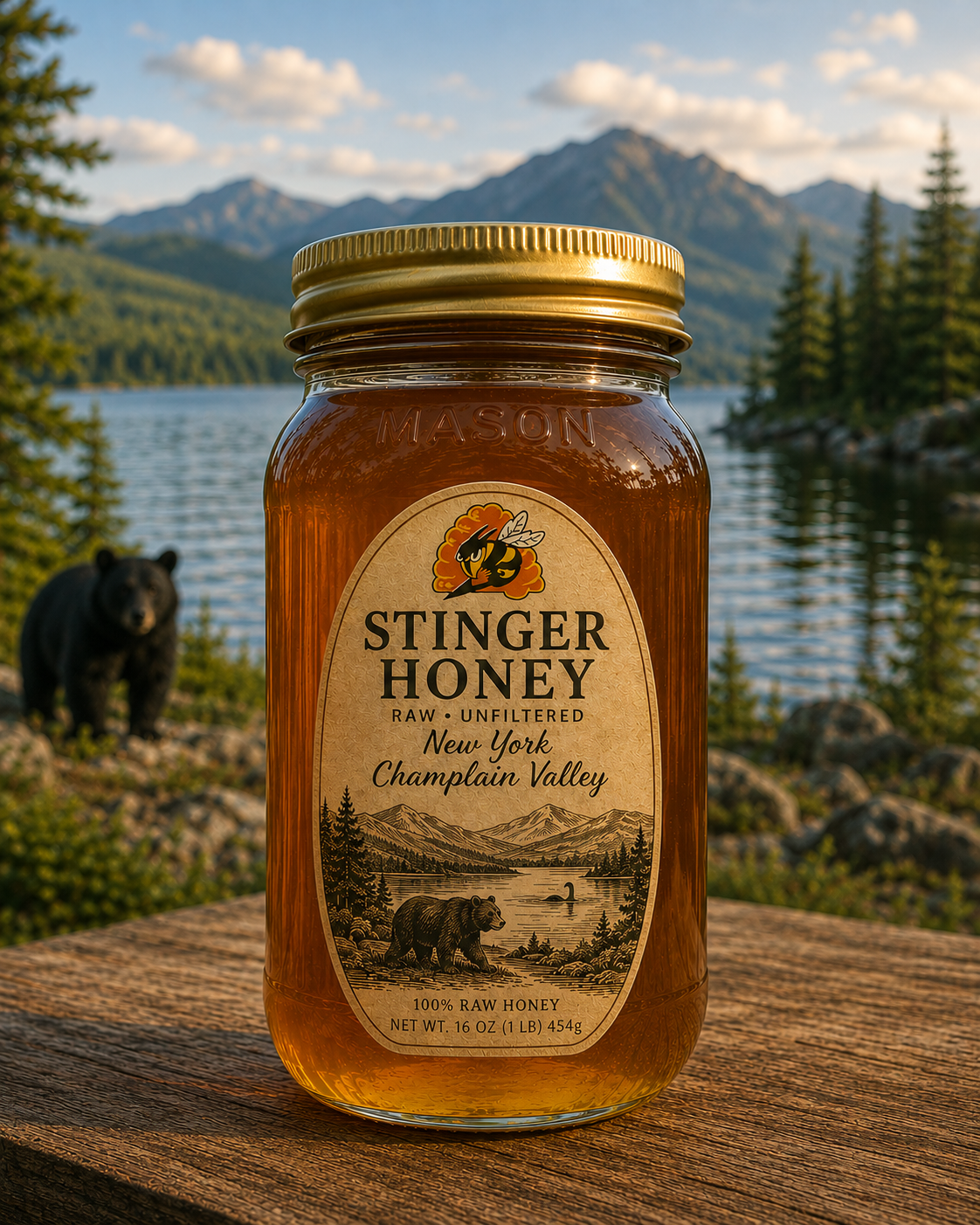
Stinger Honey Company
New York Champlain Valley Raw Honey
New York Champlain Valley Raw Honey
Couldn't load pickup availability
Raw, unfiltered honey harvested from the mountain valleys and lakeside forests of New York’s Champlain Valley. This rich northern spring honey is produced by bees foraging among basswood, clover, wild raspberry, apple blossoms, and Adirondack wildflowers that bloom along the shores of Lake Champlain and the surrounding mountain foothills.
Nestled between the Adirondack Mountains and the Green Mountains, the Champlain Valley is one of the Northeast’s most scenic and ecologically rich regions. Cool nights, clean mountain air, dense forests, fertile farmland, and diverse spring forage create a smooth, floral honey with bright layered notes and a rich golden amber color unique to the region.
Unheated and minimally handled to preserve natural pollen, enzymes, aroma, and texture — just pure New York honey straight from the hive.
Flavor Profile
Smooth and floral with notes of fresh wildflowers, light caramel, soft herbs, and warm wood. Early spring blooms create a clean sweetness with delicate complexity and a rich northern character shaped by the mountain climate and lakeside forage.
Nectar Sources
Seasonal nectar sources may include basswood, white clover, wild raspberry, apple blossoms, willow, black locust, maple blooms, and native Adirondack wildflowers found throughout the Champlain Valley and surrounding mountain foothills. Floral composition naturally varies each season depending on spring temperatures, rainfall, lake conditions, and bloom timing.
Natural Pollens
Because this honey is raw and minimally filtered, it naturally contains trace pollens collected by bees throughout the valley’s forests, orchards, meadows, wetlands, and mountain edges. Common pollen sources in the region may include maple, willow, apple, basswood, clover, raspberry, birch, oak, and native spring wildflowers. These pollens contribute to the honey’s aroma, seasonal variation, and regional identity while reflecting the biodiversity of the northern Appalachian ecosystem.
Harvest Region
Harvested from apiaries placed throughout the mountain valleys, lakeside meadows, forests, and agricultural corridors surrounding Lake Champlain during the spring nectar flow. The Champlain Valley stretches roughly 120 miles between New York and Vermont and is shaped by glacial soils, freshwater wetlands, mountain runoff, and one of the largest freshwater lakes in the United States.
The surrounding region includes rolling farmland, hardwood forests, rocky shorelines, river valleys, and remote Adirondack foothills that provide bees with abundant early-season forage. Spring temperatures moderated by Lake Champlain, combined with cool mountain nights and steady moisture, help produce aromatic nectar flows and highly distinctive regional honey.
Much of the region remains lightly developed outside of small lakeside towns and farming communities, preserving healthy forage corridors and expansive natural habitat for pollinators. Seasonal bloom timing, elevation changes, and spring weather patterns create natural yearly variation that gives each harvest its own distinct character.
Perfect Pairings
Excellent with fresh biscuits, aged cheddar, herbal tea, pancakes, roasted nuts, yogurt, and buttered toast. Also exceptional paired with apple desserts, soft cheeses, and simple breakfast dishes that allow the floral character of the honey to stand out.
From the Hive
Our bees forage across mountain valleys, lakeside wildflower fields, forests, and northern meadows shaped by the short but intense spring bloom season of the Champlain Valley. Every jar reflects the local bloom conditions, weather patterns, and natural character of New York’s Adirondack frontier.
Champ of Lake Champlain
Deep beneath the cold waters of Lake Champlain lives Champ — the massive lake creature long associated with the Champlain Valley. Known for its dark serpentine body, powerful humps breaking the surface, and sudden appearances in the deep northern waters, Champ has become part of the identity of the region itself.
Fishermen, boaters, and lakeside locals have reported sightings for generations along the remote stretches of Lake Champlain, especially near mist-covered shorelines and deeper channels beneath the Adirondack foothills. Around the valley, Champ is treated less as folklore and more as one of the enduring mysteries of the lake — another wild element of the rugged northern environment where this honey is harvested.
Share